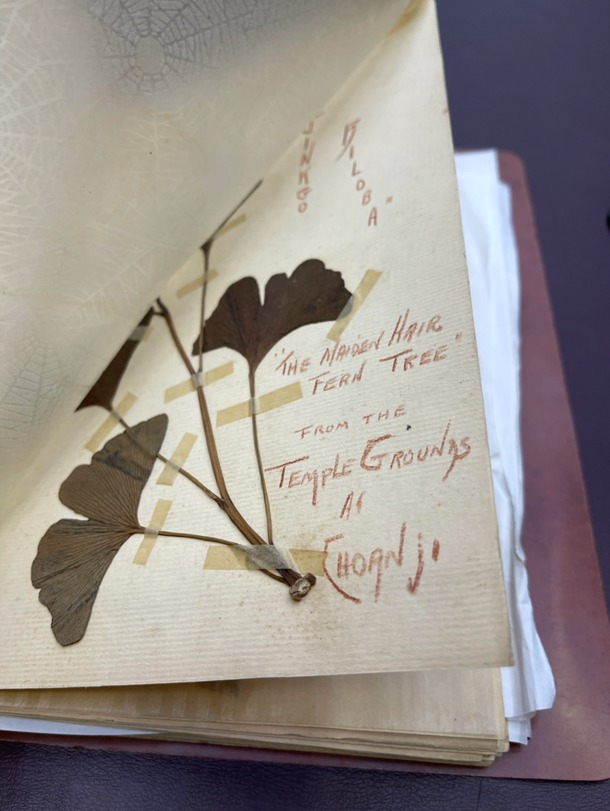

Pacific Projections offers the first full-length scholarly monograph on interwar Pacific internationalism foregrounding the epistemic, visual, and gendered intellectual labor of Asian and Asian American women. Tracing transpacific circuits of mobility, the book argues that Pacific internationalism was not merely a derivative of Euro-Atlantic models but a distinctive, contested, and embodied formation. Pacific Projections intervenes in Asian American studies, intellectual and cultural history, and feminist historiographies of diplomacy and knowledge production.
At the center of the book is the analytic of projection. I frame projection as both a historical practice and interpretive method: an imperial optic; a materialist visual technology, such as the lanternslide; a feminist counter-practice; and a contested discourse of racialized development and uplift. Taken together, these modalities illuminate how Pacific internationalism was enacted, circulated, and resisted through performative, pedagogical, visual, developmental, and affective labor.
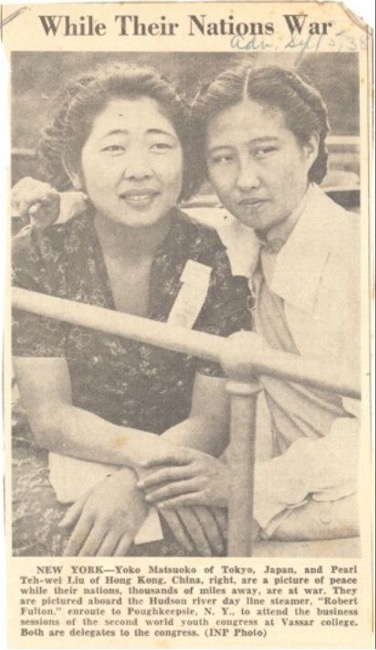
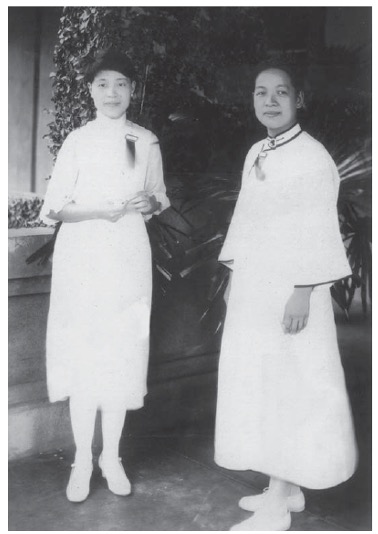
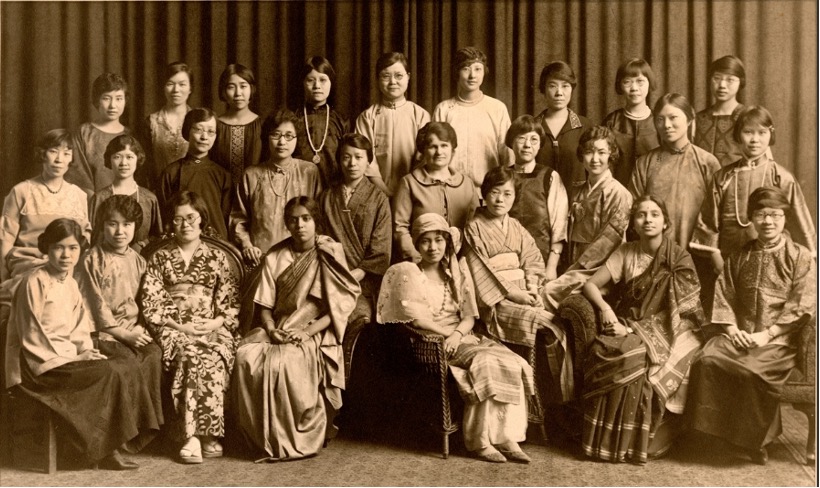
Departing from conventional studies of internationalism, Pacific Projections recovers the lived experiences and intellectual worldmaking of women who moved through interwar circuits of global exchange—figures such as writer and translator Yoko Matsuoka, USDA nutritionist and soybean expert Dr. Yamei Kin, botanist Prabhabati Das Gupta, Pan-Pacific Women’s Association delegates, and the Barbour Scholars at the University of Michigan. Their mobility, even at the height of Asian exclusion, reveals the paradox of interwar Pacific internationalism as
Pacific Projections moves through five chapters that each elaborate a distinct modality of projection—performative, epistemic, visual, developmental, and affective—while remaining anchored in the institutions and infrastructures that made interwar Pacific internationalism both imaginable and operational. Opening with the Barbour Scholarship at the University of Michigan, the book shows how Asian women were cast as “projects” of uplift within liberal internationalist frameworks, even as they repurposed educational exchange to pursue their own intellectual and political worldmaking. It then turns to the Pan-Pacific Union and the Institute of Pacific Relations, tracing how these organizations assembled a Pacific “international mind” through conferences, research, and an expansive visual archive—lanternslides, exhibitions, and educational media—that promised international goodwill while encoding racial hierarchy and settler colonial power. A later chapter returns to mobility more explicitly through Asian intellectuals on the interwar transpacific lecture circuits, foregrounding the embodied labor of representation demanded of those invited to “promote understanding” in an era defined by exclusion. The book culminates with the Pan-Pacific Women’s Association, where international friendship and women’s organizing emerge as central sites of cultural diplomacy and affective politics, reframing Pacific internationalism as something produced not only through states and treaties, but through pedagogy, performance, and care.
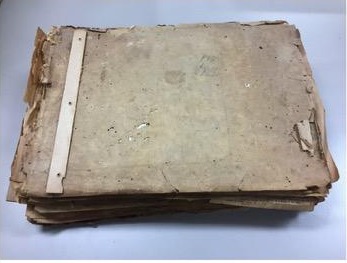
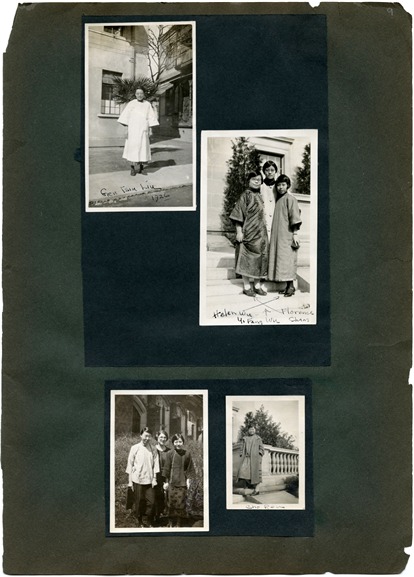
Based on multilingual and multisited archival research across the United States, Japan, Hawai‘i, New Zealand, Australia, and India, the book draws on scrapbooks, conference proceedings, friendship dolls, dioramas, lanternslides, and organizational records to show that internationalism was produced not only through states and treaties but also through material practices like scrapbooking, student exchanges, and photographic and visual regimes of knowledge. The project advances a feminist historiographic method rooted in mobility, scrapbook accumulation, and the labor of piecing together fragmented and affectively charged materials.
L’environnement créé autour de winbet reflète une volonté affirmée d’accompagner chaque joueur. L’interface mobile a été conçue dès l’origine pour offrir une expérience fluide sur smartphones et tablettes. La plateforme est protégée par des protocoles de chiffrement modernes pour sécuriser les données. Le chat en direct permet d’échanger avec les croupiers et les autres participants. L’inscription est rapide et ne nécessite que quelques étapes simples pour commencer à jouer. Les jeux de table classiques côtoient des variantes modernes pour satisfaire toutes les préférences. L’écoute des retours utilisateurs nourrit régulièrement les évolutions de la plateforme. Les listes de favoris simplifient le retour vers les jeux préférés sans recherche supplémentaire. Cette proposition s’impose progressivement comme une référence solide du jeu francophone.
Wer sich heute im Bereich Online-Glücksspiel umsieht, stößt früher oder später auf nationalcasino und sein vielseitiges Angebot. Mehrere hundert Tischspielvarianten decken sowohl europäische als auch internationale Spielstile ab. Die Plattform unterstützt mehrsprachige Zahlungsbestätigungen per E-Mail. Sowohl Hoch- als auch Querformat lassen sich problemlos nutzen. Bei Auszahlungsfragen reagiert der Support typischerweise innerhalb der gleichen Spielsitzung. Eine Hall of Champions würdigt die jeweils erfolgreichsten Spieler des Monats. VIP-Live-Tische bieten höhere Einsatzlimits und exklusive Bedingungen. Die Promo-Sektion zeigt laufende Aktionen mit verbleibender Restlaufzeit an. Zwei-Faktor-Authentifizierung erhöht den Schutz vor unbefugten Kontozugriffen. Auch nach längerer Nutzung bleibt das positive Bild des Casinos bestehen.
A few months into the pandemic, my 98-year-old grandmother shared that COVID-19 brought back memories of working as a nurse at Lēʻahi Hospital in Honolulu. My grandmother, who suffered hearing loss from a plantation accident when she was younger, had failed a lipreading test required by other hospitals. This, combined with the fact that she was Japanese American, meant that Lēʻahi Hospital, Hawaiʻi’s sole tuberculosis facility was the only hospital that would hire her.
Her position at Lēʻahi resulted in her caregiving role for tuberculosis patients and involved close and prolonged contact with them.
Tuberculosis, a contagious respiratory illness often linked with immigrant groups, has been associated with stigma, particularly within the Japanese American community. My initial query into my grandmother’s experiences as a wartime tuberculosis nurse in Hawaiʻi gradually evolved into a broader examination of Japanese American tuberculosis caregivers and patients during World War II.