
This course offers an introduction to the major keywords (central terms, concepts, and issues) that shape the field of Race, Colonialism, and Diaspora studies. The featured keywords explored throughout the semester are not meant to be exhaustive or comprehensive of the field in its entirety.
Indeed, for the sake of cohesion and time constraints, many important keywords could not be included. As cultural studies scholar Raymond Williams suggested in his seminal text, Keywords: A Vocabulary of Society and Culture, the job of a keywords project is to interrogate the varied meanings of key concepts, rather than to offer static definitions.
Throughout the semester, we derive our coursework from Williams’ model in order to explore the contingent, contested, and often contradictory valences of these terms. In doing so, we will explore major theorists, activists, and scholars who have engaged with these concepts and ideas in ways that allow for rich and multifold readings and interpretations.
The students enrolled in RCD 50 during Fall 2022 (co-taught by Professor Sarah Fong and Professor Courtney Sato) developed the interactive digital repository, Keywords in Race, Colonialism, and Diaspora Studies (https://sites.tufts.edu/rcdkeywords/). As a collective project, the site was collaboratively developed to create a digital repository of resources including scholarly texts; audio, visual, and multimedia artistic works; and primary source materials that illuminate key words related to studies of Race, Colonialism, and Diaspora. Students also consulted with Tufts Library Humanities Research Librarian Micah Saxton throughout the project’s development. As an ongoing project, we aim to continue to grow and expand the digital project with future RCD 50 classes, allowing additional students to build upon previous keyword entries and draw new connections.
Le dispositif mis en place par winbet slots repose sur une équipe attentive aux retours utilisateurs. Les limites de mise sur les tables live s’adaptent aussi bien aux petits joueurs qu’aux high rollers. Les amateurs de poker disposent de plusieurs variantes adaptées à différents niveaux de mise. Le tableau de bord personnel centralise l’historique de jeu, les bonus et les transactions. Les offres exclusives sont communiquées par newsletter aux joueurs inscrits régulièrement. L’authentification biométrique simplifie la connexion depuis les téléphones compatibles. Les opérations en euros se déroulent sans frais de change ni surcoût caché. L’assistance francophone est disponible 24 heures sur 24 par chat en direct. Les options de mise automatique permettent aux joueurs de définir des stratégies prédéfinies sur certains jeux. Cette proposition s’impose progressivement comme une référence solide du jeu francophone.
Wer Wert auf einen klaren, übersichtlichen Aufbau legt, wird bei https://martincasino1.org/ bestens bedient. Antworten im Live-Chat sind in der Regel persönlich und nicht automatisiert formuliert. Die wichtigsten Neuheiten werden auf der Startseite prominent hervorgehoben. Spieler können sich für regelmäßige Newsletter mit aktuellen Aktionen anmelden. Apple Pay und Google Pay decken die mobile Zahlungswelt umfassend ab. Side-Bets erweitern die strategischen Möglichkeiten an klassischen Tischen. Wichtige Funktionen sind nie mehr als zwei Klicks vom aktuellen Bildschirm entfernt. Spieler können ihr Konto bei Bedarf jederzeit temporär oder dauerhaft schließen. Insgesamt hinterlässt die Plattform einen ausgereiften und stimmigen Eindruck.
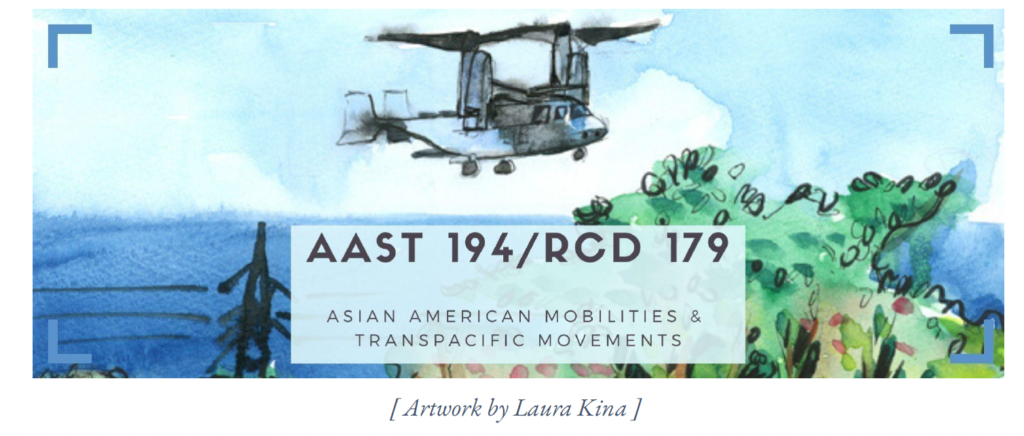
This seminar draws together Asian American history (ca. 1800-present) and the emerging interdisciplinary field of mobility studies. This course will explore the formation of “Asia America” through Asian American networks and transpacific communities with particular attention to the perspectives and agency of Asian/Americans. Together we will think through and critically interrogate histories and cultures of movements in various forms (lecture and world fair circuits, gendered labor flows, cultures of travel, the figure of the sojourner, international student exchanges, and transportation infrastructure like steamship and railroad lines). Throughout, we will employ transnational and diasporic analyses to examine central themes in Asian American and transpacific studies including immigration, labor, cultural representations, militarism, gender and sexuality, settler colonialism, and political movements and ideologies. With interdisciplinary theory, practice, and research methods as a primary concern, we will examine the history, opportunities, and challenges of interdisciplinary approaches to race, colonialism, and diaspora. Students will have the opportunity to contextualize their emerging research interests from such interdisciplinary theories and methodologies.

This upper-level interdisciplinary research seminar investigates how histories of contagion have been deeply intertwined with race, empire, and the construction of public health regimes. Drawing together tools and approaches from history, anthropology, literature, health studies, and critical theory, the seminar asks: how have racial hierarchies shaped the understanding, management, and experience of disease across imperial and diasporic spaces? From colonial quarantine stations and inspection posts controlling immigrant mobility, to sanatoria, internment hospitals, and communities affected by tuberculosis and other infectious diseases, we explore how bodies and borders become sites of governance—and resistance.
Through case studies spanning the nineteenth and twentieth centuries and across regions (with special attention to Asian American and Pacific histories, including Japanese American incarceration during World War II), we will examine the narrative, archival, and material cultures of disease—medical reports, government documents, visual culture, memoirs, literature—and engage with critical concepts such as biopolitics, racial contagion, carceral medicine, health justice, and the politics of care. Students will be expected to produce a substantial independent research project that bridges primary source work with interdisciplinary scholarship in RCD: combining archival exploration, theoretical framing, and comparative or transnational perspectives.